
Parking Vinci Paris
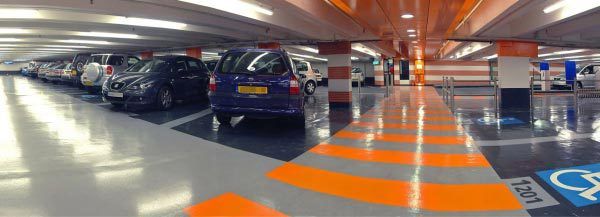
How to deal with Parking in Paris
"Every one of the spots are full!"
Expert the craft of floating: If the parking garage is full, you'll have to "drift" to discover a space. Simply a weekend ago, I discovered myself floating amidst a long column of autos, attempting to look out for people why should about leave. One distraught dash for an empty spot later, another driver swooped in and stole it, abandoning me bothered, furious… and as yet floating for stopping! Here's the means by which to stay away from a comparative destiny:
Float from a parking Vinci Paris area where you can see no less than 20 spaces. That is ordinarily the back of a line. Why 20 spaces? On the off chance that you accept a customer's normal time at the shopping center is three hours (180 minutes), then separated by 20 autos, likelihood says you'll get a space in nine minutes.
The more autos you can "watch," the shorter your hold up time. Watching 25 autos, for instance, decreases the normal hold up time to a little more than seven minutes.
Try not to attempt to observe more than 25 autos. Observing past this number makes it hard to demolish another auto to a far away spot, much the same as what transpired.
Never hold up behind another floating auto – doing as such successfully "duplicates" your holding up time from nine minutes to 18 minutes.
"I have to stop now!"
Know where to look: Agreeing Tom Jewel, the president of Chicago-based Remote Detecting Measurements, parking garages tend to top off fit as a fiddle of a chime bend, with the best vehicle focus before store doorways. In case you're in a rush and need to stop instantly, take after these tips:
Precious stone says that shopping center parking areas are infrequently full; the key is knowing where to look. Maintain a strategic distance from the spaces instantly before store doors – these are perpetually full or pressed with people floating for an open space.
Search for spots in parking Vinci Paris areas that are equidistant between passages, which is the chime's base bend. The spaces are for the most part free, and really a shorter separation to the passage than stopping at the exact back of the primary passageways' stopping column.
Expert the craft of floating: If the parking garage is full, you'll have to "drift" to discover a space. Simply a weekend ago, I discovered myself floating amidst a long column of autos, attempting to look out for people why should about leave. One distraught dash for an empty spot later, another driver swooped in and stole it, abandoning me bothered, furious… and as yet floating for stopping! Here's the means by which to stay away from a comparative destiny:
Float from a parking Vinci Paris area where you can see no less than 20 spaces. That is ordinarily the back of a line. Why 20 spaces? On the off chance that you accept a customer's normal time at the shopping center is three hours (180 minutes), then separated by 20 autos, likelihood says you'll get a space in nine minutes.
The more autos you can "watch," the shorter your hold up time. Watching 25 autos, for instance, decreases the normal hold up time to a little more than seven minutes.
Try not to attempt to observe more than 25 autos. Observing past this number makes it hard to demolish another auto to a far away spot, much the same as what transpired.
Never hold up behind another floating auto – doing as such successfully "duplicates" your holding up time from nine minutes to 18 minutes.
"I have to stop now!"
Know where to look: Agreeing Tom Jewel, the president of Chicago-based Remote Detecting Measurements, parking garages tend to top off fit as a fiddle of a chime bend, with the best vehicle focus before store doorways. In case you're in a rush and need to stop instantly, take after these tips:
Precious stone says that shopping center parking areas are infrequently full; the key is knowing where to look. Maintain a strategic distance from the spaces instantly before store doors – these are perpetually full or pressed with people floating for an open space.
Search for spots in parking Vinci Paris areas that are equidistant between passages, which is the chime's base bend. The spaces are for the most part free, and really a shorter separation to the passage than stopping at the exact back of the primary passageways' stopping column.
